
HOME
INTRO
SYMBOLS
ALMANAC
ECONOMY
GEOGRAPHY
STATE MAPS
PEOPLE
FORUM
NEWS
COOL SCHOOLS
STATE QUIZ
STATE LINKS
BOOK STORE
MARKETPLACE
GUESTBOOK
CONTACT US



The State of Florida

Port St. Joe, Florida
Photograph: James Bynum
Juan Ponce de Leon landed on the shores of northeast Florida in April of 1513. He called the area "la Florida" in honor of Spain's Eastertime celebration "Pascua florida" (feast of the flowers).
He never discovered the legendary Fountain of Youth but, if it exists, it could well be somewhere in Florida. Perhaps one of the 58.9 million tourists that visited the Sunshine State in 1999 knows where it is?
Florida, over the years has become one of the worlds strongest tourist magnets, with sun soaked beaches and crystal springs. And with a little help from a mouse, Walt Disney World continues to lure more visitors than any other single attraction anywhere in the world. A word of caution, "Watch out for alligators." Once endangered, alligators have made a strong comeback and have become something of a nuisance. Hold onto your small pets.
If you want to go to the moon, you'll probably have to leave from Florida. John Glenn became the first American in orbit when he blasted off from Cape Canaveral in 1962. On July 20, 1969, only seven years later, Neil Armstrong became the first man to walk on the moon.
THE STATE NAME:
As mentioned above, Florida was named by Ponce de Leon in 1512. "la Florida," he called this land, Spanish for flowery, covered with flowers, or abounding in flowers. Historians favor the idea that Ponce de Leon named the state because he discovered it on Easter or Palm Sunday. Others don't discount this theory, but impress upon us that the full flush of spring was on the area and the abundance of flowers in bloom and the "fragrant and delicious odors" certainly played a role.
THE STATE NICKNAMES:
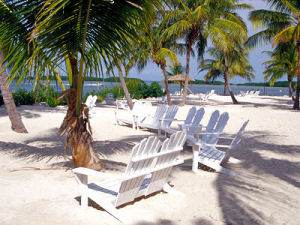
Palm Trees & Beach Chairs

The Sunshine State
Primarily supporting Florida's tourism industry, this nickname references the great measure of sunshine that falls upon the state each year.
The Alligator State
This nickname grew from the number of alligators that lived in the streams and swamplands of Florida.
The Everglade State
Florida is home to a vast network of Everglades.
The Orange State
The orange groves, so numerous across the state, earned this nickname for the state.
The Flower State
And sometimes referred to as "The Land of Flowers," for the wildflowers that are so abundant from border to border.
The Peninsula State
In fact, Florida is a peninsula and, hence the nickname, "The Peninsula State."
The Gulf State
Nicknamed such because of the great border with the Gulf of Mexico, to the west and south.
THE STATE CITIZENS:
People who live in Florida or who come from Florida are called Floridians.
Floridians have been referred to as "Alligators" after the Alligator population of the state. They've been called "Crackers" in a reference to the sound of the Mule-driver's whips over the backs of their mules in the early days of the state. (Note: Early residents of Georgia were called "Crackers" for a very different reason.) "Fly-Up-the-Creeks" is another old nickname given to Floridians. This nickname was based on the name given to a variety of Green Heron that was common along marshy shorelines. In More About Names, 1893, Leopold Wagners states that Floridians were called "Fly-Up-the-Creeks "...doubtless from their retiring disposition on the approach of strangers."
THE STATE QUARTER:
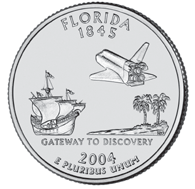
United States Mint Image
The Florida quarter is the second of 2004, and the 27th in the United States Mint's 50 State Quarters® Program. On March 3, 1845, Florida became the 27th state to be admitted into the Union.
The design incorporates a 16th-century Spanish galleon, a space shuttle and the inscription "Gateway to Discovery." A strip of land with Sabal palm trees is also depicted.
On Easter in 1513, while searching for the legendary Fountain of Youth, Ponce de Leon named the region "Pascua Florida," meaning "Flowery Easter." In 1539, Hernando de Soto and other explorers continued the exploration of the New World through the region.
Florida, home to the Kennedy Space Center, has been the starting point for most of the modern era's most significant scientific space expeditions -- from Man's first moon landing to the Voyager probe currently exploring deep space outside our solar system. From 16th-century Spanish galleons to 21st-century space exploration, Florida has played a continuing role in humanity's quest for knowledge and discovery. With the highest average temperature of any state, and the second longest shoreline, Florida is one of the world's most popular tourist destinations.
On April 9, 2002, Governor Jeb Bush appointed a nine-person Florida Commemorative Quarter Committee. In May 2002, the Committee reviewed over 1,500 design concepts and narrowed the candidates to 25. The Committee met again in June 2002 and selected 10 candidate design concepts to forward to Governor Bush, who selected five concepts -- including "The Everglades," "Gateway to Discovery," "Fishing Capital of the World," "St. Augustine," and "America's Spaceport." In a three-week public vote, Floridians chose "Gateway to Discovery" as the winning design.
For more about the state commemorative quarters, visit this page.
This 50 State Quarter Map is a great way to collect and display all 50 State Quarters.
Sources...
Carpenter, Allan & Provose, Carl. The World Almanac® of the U.S.A.. World Almanac Books (An Imprint of K-III Reference Corporation, A K-III Communications Company). Mahwah, N.J., 1996.
Shankle, George Earlie. State Names, Flags, Seals, Songs, Birds, Flowers, and Other Symbols. Irvine, Calif.: Reprint Services Corp, Revised edition, 1971.
Shearer, Benjamin F. and Barbara S. State Names, Seals, Flags and Symbols: A Historical Guide Third Edition, Revised and Expanded. Westport, Conn: Greenwood Press, 3 Sub edition, 2001.
Additional information
Florida
Barbara A. Sommervill
Florida (From Sea to Shining Sea), by Barbara A. Sommervill. 80 pages. Publisher: Scholastic Library Publishing (March 2008) Reading level: Grades 3-5. Presents information about Florida's people, geography, history, landmarks, natural resources, government, state capitol, towns and cities, and more.
Florida
Patricia Chui
Florida (World Almanac Library of the States), by Patricia Chui. 48 pages. Gareth Stevens Publishing (January 2002) Reading level: Grades 4-6. Filled with the most up-to-date information, including the latest Census results. Full-color photos bring to life the story of Florida. In addition to an in-depth factual profile of Florida in the form of a state Almanac, this book offers fascinating and lively discussions of the state's history, people, geography, government, economy, culture, and lifestyles. A section on Notable People, a calendar of events, and enough primary source documents, time lines, maps, and other tools to make this unquestionably the best young adult reference material on the USA available anywhere.
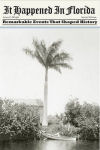
It Happened in
Florida
Lynne E. Wright
It Happened in Florida, by Lynne E. Wright. 160 pages. Globe Pequot; Second edition (November 10, 2009) From Ponce de Leon's discovery of the "Land of Flowers" in 1513 to the suspense of the 2000 presidential election, It Happened in Florida takes readers on a behind-the-scenes tour of thirty of the most compelling episodes from the Sunshine State's vibrant past. This revised edition includes brand new glimpses into Florida history, a map, and a thorough index.
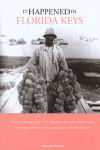
It Happened in
the Florida Keys
Victoria Shearer
It Happened in the Florida Keys, by Victoria Shearer. 160 pages. Globe Pequot (February 1, 2008) True Tales from the Florida Keys--From the 1935 Labor Day hurricane to the search for Atocha's treasure, It Happened in Florida Keys gives readers a unique look at intriguing people and episodes from the history of the Florida Keys.
Meet Henry Flager, the man who used his own fortune to build the first railway to the Keys. Learn why Perky's Bat Tower didn't protect people from pesky mosquitoes. And discover how the Key West cigar industry went up in smoke-still a hot topic of debate!
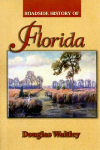
Roadside History
of Florida
Douglas Waitley
Roadside History of Florida, by Douglas Waitley. 383 pages. Mountain Press Publishing Company (November 1997) From Ice Age hunting grounds to modern tourist mecca, Roadside History of Florida explores the Sunshine State in all its wondrous incarnations.
Cleverly written and organized with a wealth of historical photographs, Roadside Florida begins with a chronology of significant events from the time Florida was geologically part of Africa, 500 million years ago, to the devastation of hurricanes Andrew and Opal in the 1990s. The introduction covers major historical eras in more detail, offering a brief but thorough overview of the state's past. Valuable to visitors and native Floridians alike who want to visit historical places, exploring Florida's rich past while enjoying its natural beauty. 383 pgs; Pictures and maps.


The History of Florida
| Do you know... |


